
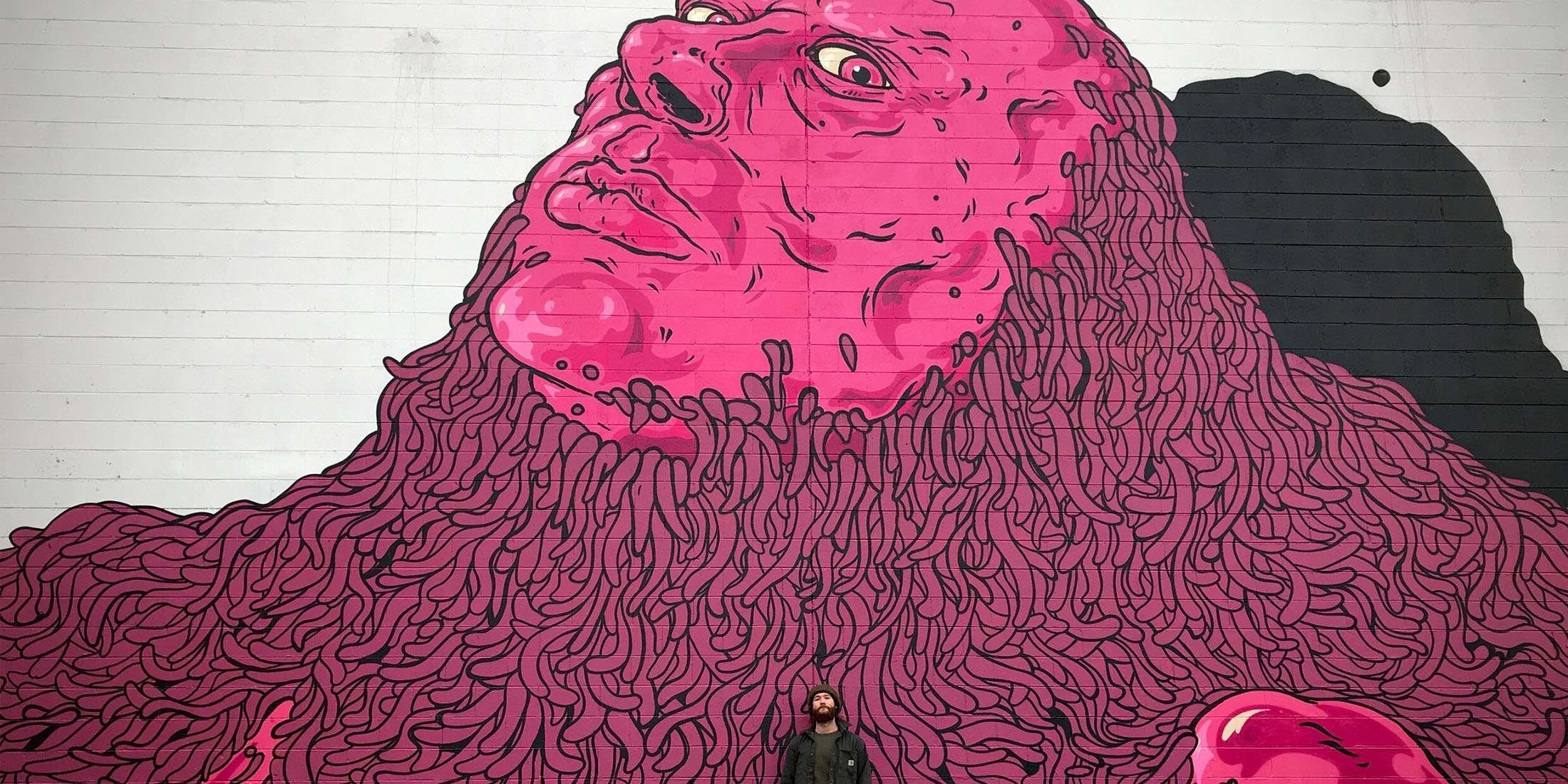
Denver-based artist Max Coleman, also known as Oak Bloak, creates work rooted in reverence for the living world. Moving fluidly between murals, design, and pen-and-ink illustration, Coleman treats art as both a spiritual practice and a civic responsibility. Deeply influenced by Transcendentalism, Renaissance painting, and street culture, his work centers animals, land, and the shared vulnerability of existence. We talked with the local artist about art as a lifelong calling, the role of risk and experimentation, and how great things are always possible if you believe.
Can you walk us through the moment you first realized art was going to be a major part of your life?
Being an artist has always been my plan and path. I never considered or accepted alternatives. I remember looking at oil paintings from the renaissance as a kid, they were real to me. I was certain that the places and characters and weather in those paintings all existed somewhere far away, that they weren’t just pictures, they were portals. I still feel this way, and chasing that feeling always accompanies me. When I catch a wave of it from my own work, I know I’m onto something.

Nature and animals play a large role in your work. What is it about these subjects that fascinates you?
This is a question I could answer in more ways than I can detail here. But to be brief: I am in love with Earth, as I am in love with the act of living. Every aspect of EXISTING is extraordinary if you allow it to be. In nature’s creations I see only beauty. The dying of all things and the birth of all things have their equal weights in my art. I draw the animals because they are my neighbors who I share the air and water with, and I draw the Earth because it made my body and soul. We are all of us made out of earth, we must cherish that.
Moving between design, painting and murals, what role does experimentation play in your work, and what medium do you gravitate toward?
I experiment constantly. I challenge myself purposefully and at times aim to annoy myself with complex prompts. Moving between many mediums helps this experiment. But that tendency has helped and hurt me. I think that “the art world” likes consistency in a particular style and theme. But that takes all the fun and risk out of it to me! I love the experience of trying to save a piece of artwork from mistakes willingly made. My original love, though, is pen and ink. It never lets me down.
Tell us about the moniker Oak Bloak.
I am a bloke who loves trees! Oaks especially. They are stubborn trees. Half of them don’t even drop their leaves in winter, and I like the example that they set. They grow despite injuries or sickness and offer all that they have to help others. They create oxygen, shelter, and feed those around them, and in the process, they become gigantic monuments of strength and kindness. What’s not to like?
Which artists or movements have had the biggest impact on your approach to art?
The Transcendentalist movement formed most of who I am. The poetry of Walt Whitman, in particular, was a formative element of my personhood. It still is. Art wise: Don Francisco Goya, Caravaggio, Arnold Böcklin, Albrecht Dürer, and Théodore Géricault were and are some of my biggest influences. My favorite LIVING group of artists is Broken Fingaz.

Being a Denver artist, how has the street art scene here shaped your perspective and style?
Denver has given me everything. The community of artists out here in the mile high are some of the best working in the country right now, and the mentorship I’ve received from my peers is precious to me. It has always given me an attitude of possibility. No wall too big, no spot too ragged to paint and make important. That’s palpable in the graffiti and street art of this city. Denver is a playground for artists if you look in the right places, and when you start paying attention, you’ll feel where the people are at by what you see written on the walls and stuck to the poles. I love it.
What do you hope people feel or experience when they encounter your work for the first time?
I hope it shakes them up and anchors them back to their feet. I’m not sugar coating anything, I want to connect the public on the inherent commonalities we have, the easy ones and the difficult ones. When you get down to the rawness of life with a piece of art, it has a way of freeing you as the viewer. I need it as the artist, and it’s affirming when I see it on the faces of those who look at my work.
What’s next for Max Coleman?
I want to dedicate my art and efforts to establishing a new Bison preserve in the state of Colorado. They are our rightful neighbors, and we must do more for them. I spent the last years chronicling the struggles and legacies of cows in my book, “The Burden of Cattle,” and this project is my next step. I want the spiritual and ecological messages of my art to make the jump into substantive action and policy in the real world for the benefit of this species. Great things are possible if you believe they are, and I do, don’t you?

Any parting words?
Ask for help from others more, and help them in return, and always, always, always defend the defenseless.

Leave a Reply
You must be logged in to post a comment.