
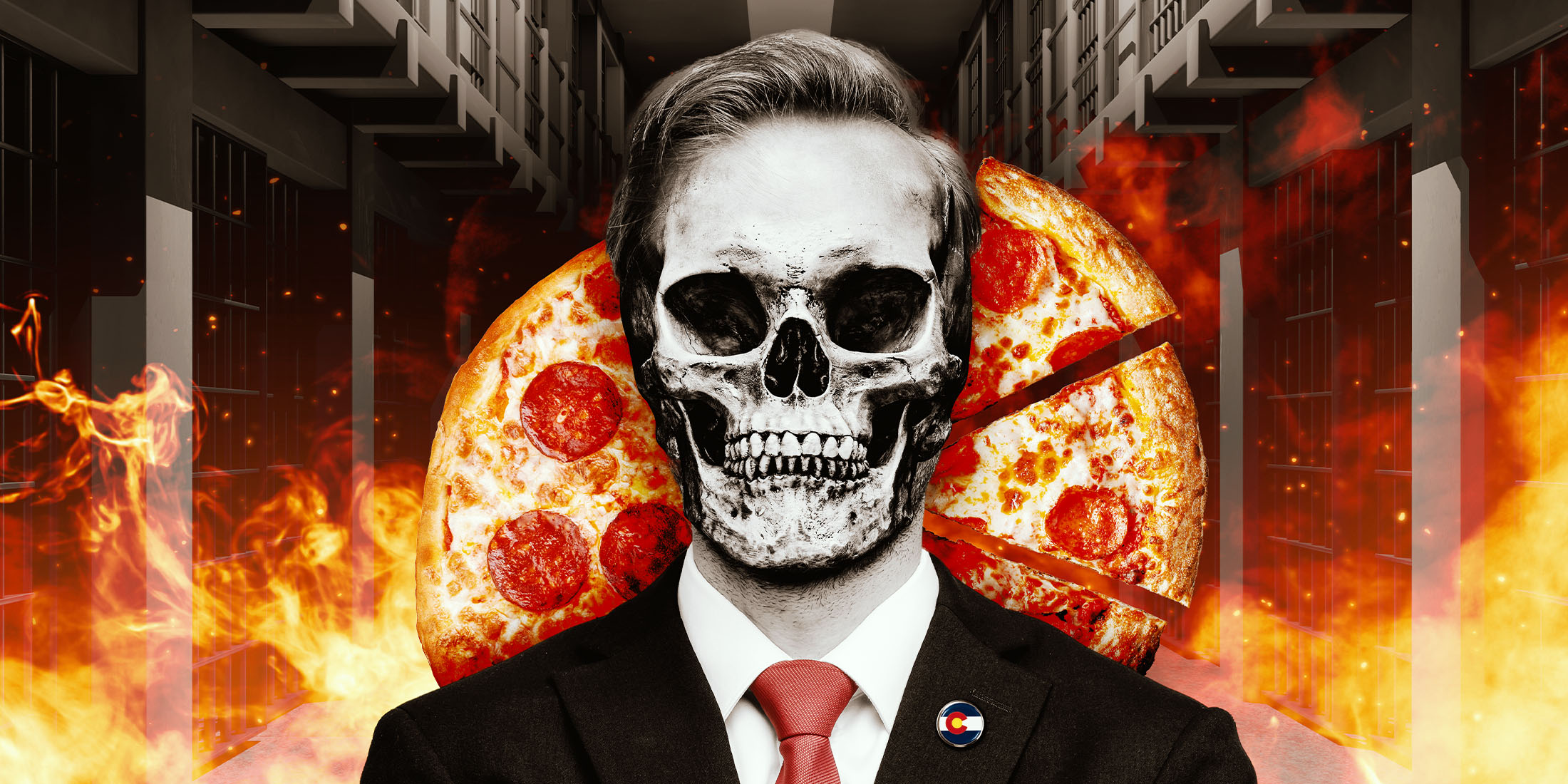
In the quiet, pine-scented air of Monument, Colorado, on the evening of March 19, 2013, Tom Clements did what millions of people across the world do with barely a second thought. He answered his front door.
On his doorstep stood a pizza delivery driver, complete with a uniform, an insulated bag and a calm demeanor. It was the ultimate suburban camouflage. But there was no pizza. There was only the loud “bang” of a gunshot. Within seconds of opening the door, the Executive Director of the Colorado Department of Corrections had been shot dead on his own front porch, and the “delivery man” had vanished into the night. This wasn’t just a murder; it was a systemic nightmare coming home to roost.
Tom Clements wasn’t a lock ’em and block ’em kind of warden. He was a visionary who believed that if you treat men like animals, they will eventually become them. He walked facilities, spoke directly with correctional officers, and made a point to understand the people inside the system he was trying to change. Colleagues described him as calm, deliberate, and deeply committed to making prisons safer, not just through control, but through structure and reform.
That approach earned him respect from many inside the department, but it also placed him at odds with a system that had long relied on the isolation and fear of solitary confinement, or “The Hole,” to maintain order. He was actively dismantling the practice of long-term solitary confinement because he understood that it was a breeding ground for men to become monsters. He knew that prison gangs used The Hole as a means of recruiting and elevating members.
One of the men Clements was desperately trying to transition out of solitary was Evan Spencer Ebel. Ebel had been serving an eight-year sentence for an assault following a 2004 carjacking, a crime spree during which he’d managed to accidentally shoot himself in the stomach and leg. Despite Clements’ efforts to create a ‘step-down’ process for him to transition out of solitary confinement, Ebel’s constant disciplinary violations meant he never actually made it to the general population. In a bitter twist of fate, he was released on parole directly from the isolation of The Hole straight onto the streets.
Perhaps the most infuriating detail of the case is that Evan Ebel should never have been on the streets at all. He was a member of the 211 Crew, a white-supremacist prison gang. He had spent years in solitary confinement, which critics argue causes damage to the psyche of inmates and leaves them vulnerable to gangs like the 211 Crew. Due to a clerical error in how his sentences were recorded, listing them as concurrent rather than consecutive, Ebel was released on mandatory parole four years earlier than expected.
In the days before Ebel knocked on Clements’ door, he cut off his ankle monitor and acquired a disguise in the worst way possible. Instead of buying a uniform, he stole one. He ordered a pizza to a remote location and waited for Nathan Leon, a 27-year-old father of three working a second job to provide for his family. When Leon arrived to deliver the pizza, Ebel abducted the young father at gunpoint and forced him to record a rambling, white supremecist manifesto before eventually killing him for nothing more than his uniform and his car.
Leon wasn’t connected to the prison system in any way. He was simply trying to make extra money for his family, picking up shifts and delivering pizzas like millions of others across the country. His life intersected with Ebel’s for a matter of minutes, and it cost him everything.
As investigators dug deeper, they found evidence suggesting Ebel may have been acting as a gang hitman sent to take out the man threatening the status quo. Clements’ reforms were bad for business. By reducing solitary confinement and improving mental health care, he was breaking the gangs’ grip on “the hole,” where they recruited and radicalized members. To the 211 Crew, Clements wasn’t a reformer; he was an existential threat.
The terror didn’t end in Colorado. Two days later, Ebel was spotted in another stolen car in Texas. What followed was a high-speed chase that quickly devolved into a shootout. Ebel opened fire on Deputy James Boyd during a traffic stop, shooting him in the head and face. Injuries he miraculously survived. When Ebel finally crashed, he didn’t surrender. He exited the vehicle, still armed with the pistol he’d used to kill Clements and Leon, firing at officers before he was ultimately shot and killed.
In the aftermath, Colorado reeled. The idea that a prison gang could reach beyond the walls and strike at leadership in their own homes forced a reckoning. Policies were scrutinized, security was tightened, and the risks faced by those working in the corrections system became impossible to ignore. For Tom Clements and Nathan Leon, that scrutiny would come far too little, too late.

Leave a Reply
You must be logged in to post a comment.