In just three years, Outside Days has evolved from a new Denver festival into something much harder to define.

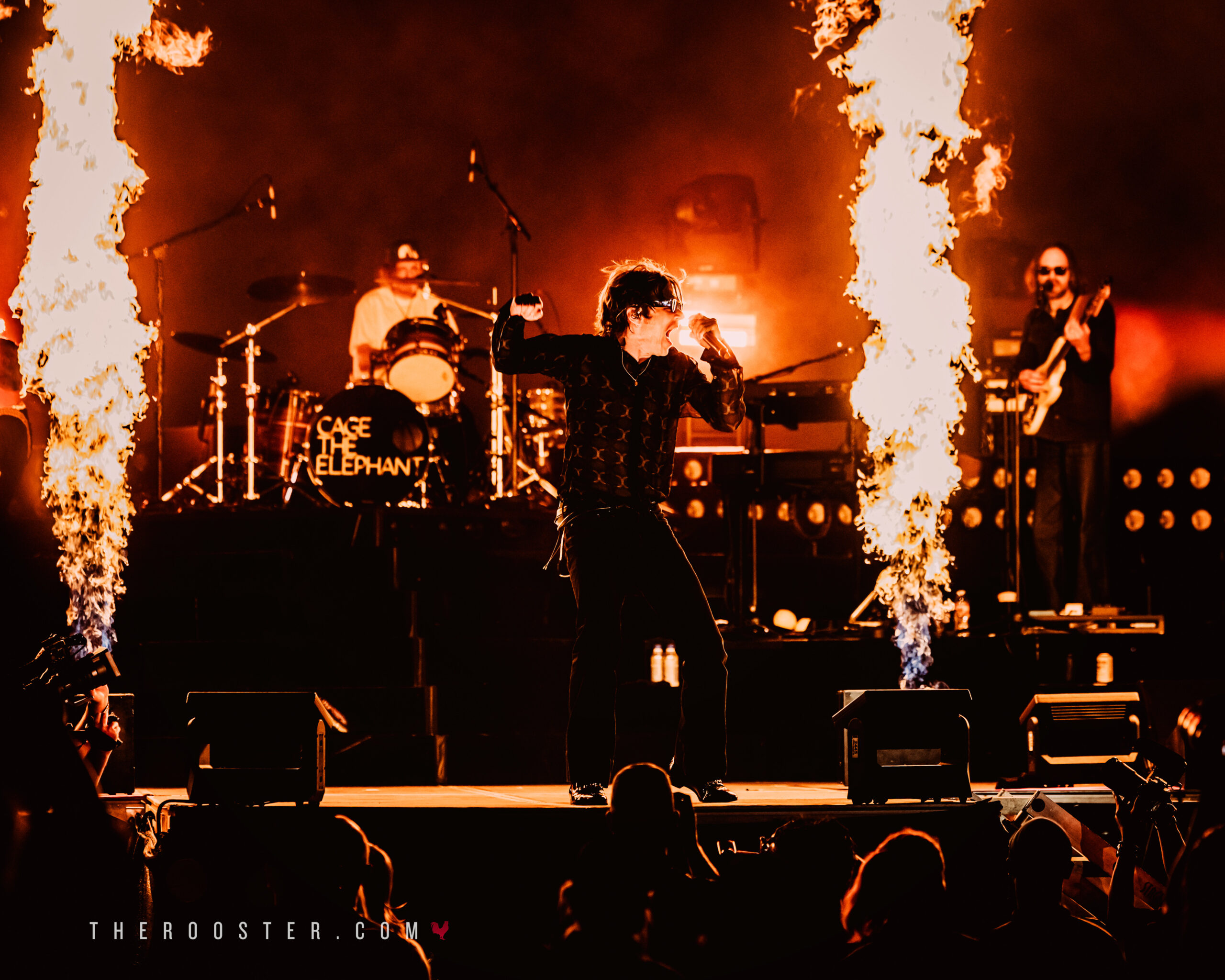
There are still major headliners. This year’s lineup includes My Morning Jacket, Death Cab for Cutie, Cage The Elephant, Japanese Breakfast, and Tash Sultana. But somewhere along the way, the event began expanding beyond the traditional shape of a music festival.

Now rebranded from Outside Festival into Outside Days, the four-day gathering blends live music, film, wellness, outdoor culture, industry networking, and experiential programming into something far broader than a concert weekend. One moment might involve a startup pitch competition or keynote conversation with an outdoor icon. The next could involve yoga sessions, documentary screenings, or thousands of people gathered in front of a main stage at sunset.

For Christopher Jerard, Chief Brand Officer at Outside Inc., that evolution reflects the larger mission at the center of the company itself: creating spaces that encourage people to reconnect with both nature and one another.

At its core, Outside Days functions less like a standalone festival and more like a shared cultural ecosystem. Music, wellness, film, recreation, business, and storytelling are treated as overlapping parts of the same world rather than isolated experiences. The CEO attending an Outdoor Summit panel might end the night watching a headlining set. A filmmaker screening work during the day might spend the afternoon at a wellness activation or exploring the festival grounds. The boundaries are intentionally fluid.

That philosophy also explains the event’s rebrand. After two years of rapid growth, organizers realized the festival had expanded beyond the limits of what the word “festival” could fully communicate. The new name creates room for a larger vision: an annual gathering point for outdoor culture itself.

Denver has naturally become the home for that vision. Colorado already sits at the center of the outdoor industry, but the connection goes beyond business infrastructure. Outdoor living is already embedded into the identity of the city, making Denver feel less like a host market and more like an extension of the event itself.

That alignment becomes even more visible in 2026 as Outside Days relocates from Civic Center Park to the Auraria Campus. The expanded footprint allows organizers to simultaneously host music programming, wellness experiences, film screenings, career fairs, and industry summits across multiple environments, creating a more immersive and exploratory atmosphere throughout downtown.

The move also follows a defining moment during the 2025 edition, when severe weather forced a full evacuation during Sunday programming. While the Civic Center years helped establish the festival’s identity, the Auraria setup offers greater flexibility and infrastructure moving forward while supporting the event’s long-term ambition to activate larger portions of the city.

That ambition has already drawn comparisons to South by Southwest, a comparison Jerard acknowledges while also distinguishing what Outside Days is trying to build. Unlike SXSW, which spans multiple creative industries, Outside Days remains singularly focused on outdoor culture in all its forms. Music is one part of that world, but so are wellness, endurance, environmental storytelling, innovation, recreation, and community.

Outside Days ultimately reflects a broader cultural shift away from hyper-digital isolation and toward shared physical experiences. Wellness activations, accessible programming, family-friendly spaces, and community-centered experiences are all designed to remove barriers rather than reinforce exclusivity. Whether someone arrives as an outdoor athlete, a music fan, or simply someone curious about spending more time outside, the goal is the same: making people feel like they belong there.

While the scale of Outside Days continues growing quickly, Jerard says success is measured less by size than by impact. The larger vision is cultural permanence: an annual intersection point where artists, athletes, filmmakers, founders, brands, and audiences all gather around a shared idea. Outside Days is positioning itself not simply as a festival, but as a long-term gathering space for outdoor culture itself.

We caught up with Christopher Jerard, Chief Brand Officer at Outside Inc., to talk about the evolution of Outside Days, Denver’s role in shaping the event, and why the company believes outdoor culture deserves a flagship gathering of its own. Check out our conversation below!

[Rooster]: Outside Days has evolved quickly in just a few years, from a new festival into something much broader. When you step back, how do you define what this event actually is today?

[Christopher]: Outside Days is a multi-day gathering built around a simple belief: that time outside is essential to human health, happiness, and connection. It’s music, experiential, film, ideas, wellness, food, and community all happening together in one 20-acre footprint.

And really, it is the physical manifestation of our mission at Outside: to actually help people get outside.

We have Death Cab for Cutie, My Morning Jacket, and Cage the Elephant on the main stage at night, Mountainfilm + Sundance film screenings at FILM, and conversations with Alex Honnold, Travis Rice, and Jesse Diggins for IDEAS during the day. A job fair for people who want to work in the industry and brands that need talent. Ignite is our startup pitch competition for outdoor brands and an executive summit where C-suite leaders of the biggest outdoor companies are sitting down together and talking in public about challenges and solutions. 

It’s not really one thing. Like Outside, it’s an ecosystem for outdoor culture – where it feels good to hang out! 

The shift from “Outside Festival” to “Outside Days” feels intentional. What prompted that rebrand, and what does the new name allow you to express that the original didn’t?

After our second year, we stepped back and looked at what we were actually building, and “festival” just didn’t capture it anymore. Festival implies a weekend, a music lineup, a contained thing. What we’re doing is a multi-day experience that includes an industry conference, a leadership summit, film premieres, a startup competition, a career fair, wellness programming, family activities… and yes, always, incredible live music. “Days” gives us room to express all of that. It also opens the door for the brand to expand beyond a single weekend in a single city. It’s the name for a movement about time outdoors. Better DAYS are HERE! 

There’s a clear ambition to build something that goes beyond a traditional music festival. How do you balance music, film, ideas, and industry programming into one cohesive experience?

We aren’t building a music festival brand as so many have done before us. We are building a festival for an existing community. A very powerful and beautiful community. And this event is a love letter to that community with a PS: Join Us. Because it feels good to gather outside – especially in a world that is increasingly isolated, addicted to screens, and sedentary. 

Outside is the ecosystem of media, tools, services, and experiences (like Days and Warren Miller Film Tour), and is an antidote to the algorithm. Come and hang out for a few days, and I guarantee you’re going to feel better. 

The key insight to all these different experiences is that these aren’t separate audiences. They’re the same people at different times of day. The CEO who’s in our Summit session Friday morning is the same person watching Flaming Lips on Saturday night. The filmmaker screening a short at Mountainfilm is the same person who hit the cold plunge that afternoon. We designed Outside Days so that these worlds bleed into each other on purpose. 

The industry conference gives the festival deep industry networking and credibility. The music gives the conference culture. The film and ideas programming gives everything depth and texture with a big dash of outdoor celebrity. When you put all of that in the same physical space over the same long weekend, something happens that none of them can create alone. 

You’ve referenced a long-term vision of activating as much of downtown Denver as possible. What makes Denver the right place to build something of this scale and identity?

Colorado is the center of gravity for the outdoor industry. So many outdoor brands are headquartered here, and we’ve had incredible state-level support through Governor Polis, OREC, and the Economic Development Commission, who understand what this industry means to Colorado. 

But beyond the industry piece, Denver is a city that lives outside. The culture already exists here. We’re not importing something foreign; we’re amplifying what’s already true about this place. Our long-term vision is to activate as much of downtown Denver as possible! We want to declare Outside Week. From the beginning, we want to see all of Denver light up. From Confluence to Civic Center – restaurants, venues, public spaces –  so that the city itself becomes part of the experience.

This year marks a move from Civic Center to the Auraria Campus. How does the new location change what you’re able to do with the event?

The move to Auraria – it does change a lot. We love Civic Center Park, and it was perfect for our first two years. And we envision Outside Days connecting the city – up and down 16th Street. At Civic Center Park, it was so beautiful, but limited on spaces. Auraria gives us so many options – the King Center concert hall for Summit and film programming, a space for our career fair, outdoor plazas for festival worlds, and indoor backup spaces when we need them. 

That last part matters – we learned the hard way in 2025 when a severe thunderstorm on Sunday forced a full evacuation mid-set. The campus creates a sense of exploration. Moving between indoor sessions and outdoor stages, food areas, and wellness zones. It’s a real journey through the day.

The Outdoor Summit has grown into a major part of the week, bringing together industry leaders, startups, and policymakers. How important is that piece to the overall vision of Outside Days?

It’s fundamental. We know the outdoor industry needs a convening point, a place where brand leaders, policymakers, athletes, artists, startups, and creators come together to talk about the future of this space. 

Our Industry Conference includes Ignite, which is a startup pitch competition where founders compete in front of the people who could fund or partner with them, with the first-place winner receiving a prize valued at $100,000. We have Attract, our travel track for leaders in that important space. We have the Summit itself, which brings together C-suite executives for keynotes and working sessions. When you combine that industry layer with a consumer festival, you create something no one else in the outdoor world offers. The entire ecosystem in one place for one week.

Outside Days has been described as the “SXSW of the outdoors.” Do you see that comparison as accurate, or is there something distinct you’re trying to build beyond that framework?

I appreciate the comparison and have referenced it a few times already. Ha! The comparison has been made in headlines, I think, to communicate that this is “more than a concert.” And out of respect for that event, and the 40 years they have been doing that, it’s important to say there are huge differences. We also have a multi-format structure of conference, plus festival, plus film. And I would say we aspire to building what they have built in becoming the center of culture – and transcending the early gatherings into being a place where brands launch new ideas in our industry because the consumer and the influence are in the audience of attendees.  

But we’re building something different. SXSW is many things to many people across many industries. We’re laser-focused on one thing: outdoor culture. Every piece of programming, every partnership, every stage is oriented around the belief that time outside makes life better. That can be sport. That can be recreation and exercise. That can be health and wellness. That focus is our advantage. We’re not trying to be the next SXSW. We’re trying to define a category that doesn’t have a flagship event yet. There is no Super Bowl of outdoor culture. That’s what we’re building.

At its core, Outside Inc. is about getting people out of their routines and into the natural world. How does that philosophy translate into the on-the-ground experience of this event?

I think about this – a lot. 

Our mission at Outside is to actually help people get outside. The word “actually” is doing a lot of work in that sentence. So is help. It means we’re not just talking about outdoor culture from behind a screen and pushing content and inspiration into the world. That’s an important part of the ecosystem at Outside – but what is a brand actually doing to help people get outside? That’s new. And we’re doing it at Outside Interactive in a variety of ways. One way is this event. And the event itself is the mission in action. You’re outside, in community, trying things, moving your body, discovering something new. 

We have REI’s Rooted area, where you can get hands-on with gear. We have a health and wellness zone with cold plunges and yoga. We have a family and kids area, so parents aren’t choosing between the event and their weekend with their children. We have a career fair connecting people to jobs in the outdoor industry. It’s all designed to lower the barrier and be inclusive and transformative. Whether you’re a diehard climber or someone who’s never been on a hike but likes the idea of spending more time outside. Both of those people should feel like they belong here.

As this continues to grow, what does success look like for Outside Days? Is it about scale, cultural impact, or something more intangible?

Honestly, it’s less about how big we get and more about what we represent. Success is when someone who never thought of themselves as “an outdoor person” comes to Outside Days and leaves feeling like this is their community. Success is when the outdoor industry treats this as their annual gathering point: where deals get made, ideas get shared, and the culture moves forward. Success is when the artists, filmmakers, athletes, and brands who show up here feel like they’re part of something that matters beyond the weekend. 

And look, scale matters too.  We want to reach more people, and we’re growing. We want to be durable. And maybe even portable. And we’re very happy that by Year 2, now going into Year 3, Outside Days has achieved our financial goals and success faster than almost any comparable event in the industry. We’re proving that mission-driven experiences, serving a community first and welcoming the world second, can also be great businesses. That’s the model.