
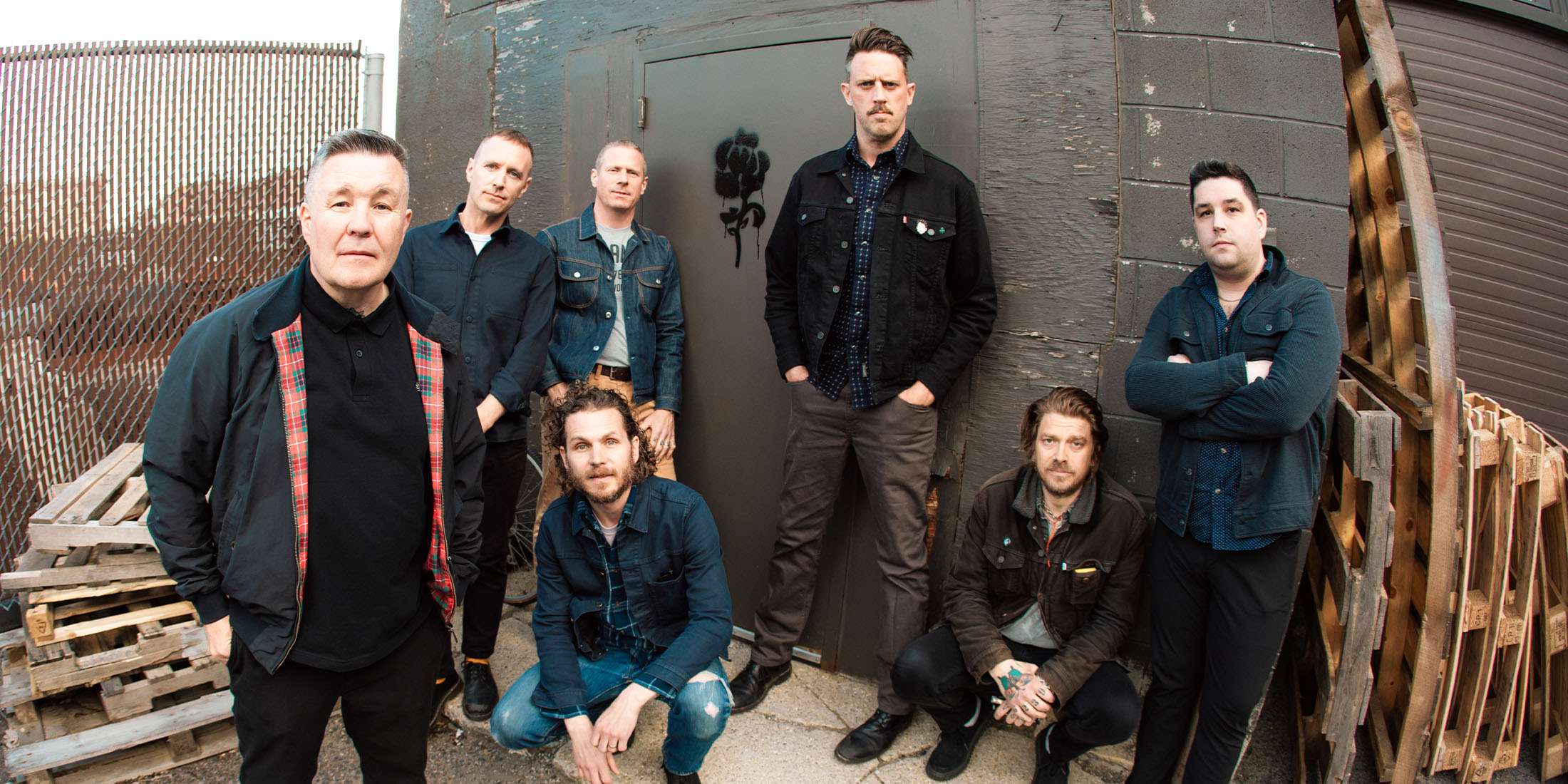
Dropkick Murphys frontman Ken Casey chatted with us about the Boston band’s new record leading up to the supporting tour, and their recent viral moments using the band’s name and image as symbolic of punk protest in the political arena.
ropkick Murphys have established a 30-year career defending the working class – speaking up for labor unions while speaking out against those who exploit them. The latest release from the Boston staple, For the People, continues this theme.
The band received unexpected notoriety when former D.C. Metropolitan Police Officer Michael Fanone was spotted wearing a Dropkick Murphys “Fighting Nazis Since 1996” t-shirt to a House Judiciary Committee hearing in January. Fanone, who defended the Capitol on Jan. 6, 2021, was spotted in the gallery and confronted a far-right activist during the proceedings. The band supported Fanone, noting he has been a fan since their first D.C. show in 1996.
We spoke with Casey about the band’s roots, punk rock showing up in United States politics in the form of a Dropkick’s t-shirt, and what it means to be a punk rock band speaking out against injustice today.
What was the core idea or feeling you wanted listeners to take away from this new record, and how did that evolve during writing and recording?
[Ken Casey] I don’t know that we ever really go into it with a preconceived notion of what we’re going to do or how it’s going to come out. I do know that we’ve always had that solid fan base. It feels like we carry a banner for working-class people. Obviously, we feel like there are a lot of injustices going on in the country at the hands of the powerful politicians and the wealthy billionaires, and we just felt like we need to be a voice for the voiceless.
After three decades as a band, how do you feel your sound and message have matured on this record compared to This Machine Still Kills Fascists?
Well, we were coming off two acoustic albums in a row, so I think we had that yearning to get really loud again. Also, the album before that was made during the pandemic. We just felt like everyone was suffering enough, and we wanted more focus on bringing happiness to people. We wanted to keep it a little bit lighter. We just had this real desire to be loud and a little bit more angry than normal, just because we hadn’t been able to in a while. In a musical sense, not just lyrical.
For the People comes out at a particularly tense moment in American politics. How do you see the role of music—and Dropkick Murphys specifically—right now?
If you’re a band that’s never dealt with politics, maybe you can sit on the sidelines. But our very first lyrics, on our very first record in the 1990s, were “The once steel-tough fabric of the union man. Was sold and bartered away. Fed to money wolves in the Reagan years.”
The Reagan era broke the back of the working class by destroying some of the core of labor protections, bringing money into politics and leading to the start of this massive wealth divide that we have in America. If you start out like that and you’re not ready to speak up now, then what the hell have they been up to for the last 30 years? Not standing up and speaking up now would’ve just made everything we’ve done for the last 30 years a mockery.
Last month, Michael Fanone wore a Dropkick Murphys shirt reading “Fighting Nazis Since 1996” to a House Judiciary Committee hearing. What went through your mind when you saw that image?
Well, Michael’s an old friend if you’ve been in the punk scene, in the underground anyway, especially if you’ve been an outspoken, anti-racist. Our shows back in the old days used to be kind of a touching off point for a lot of fighting between racist skinheads and anti-racist skinheads and us getting caught up in it as well. So it’s something we’ve always been involved with, unfortunately, and been standing up against.
We’re proud to be on the back of a guy who stood up for his country and is still standing up for the cause of justice and democracy. Politics is part of the culture, especially at the moment, and it’s always been organic.
Some people say, “Shut up and sing.” How do you respond to that?
Half the time, it’s usually someone who is right-wing, and they wouldn’t mind if we sang the politics they agreed with. A lot of times, it’s trolls in their mother’s basement. If it is someone who really listens to us and likes our music, you got to keep in mind having a white, working class fan base, we are at the epicenter of the of people who stood side by side with us in our message A lot of our fans would have agreed with us all day, every day, until this division started, and it was started on purpose. At the end of the day, we can always say our message has not changed since we started.
How can people support the Claddagh Fund?
The website is claddaghfund.org. We’ve been raising money for over 15 years to support veterans, addiction recovery programs, and children’s causes. Hopefully, that work continues long after the music stops.
What would you like to say to your Colorado fans?
Man, we have so many good friends in Denver and have a long history there. We played Denver the night of the Columbine shooting. I remember driving into the city and seeing people on the corners with special edition afternoon papers. When you’re there with a city, when they’re mourning like that, it just always made us feel such a negative thing, but it actually deepened our ties with Denver.
Leave a Reply
You must be logged in to post a comment.